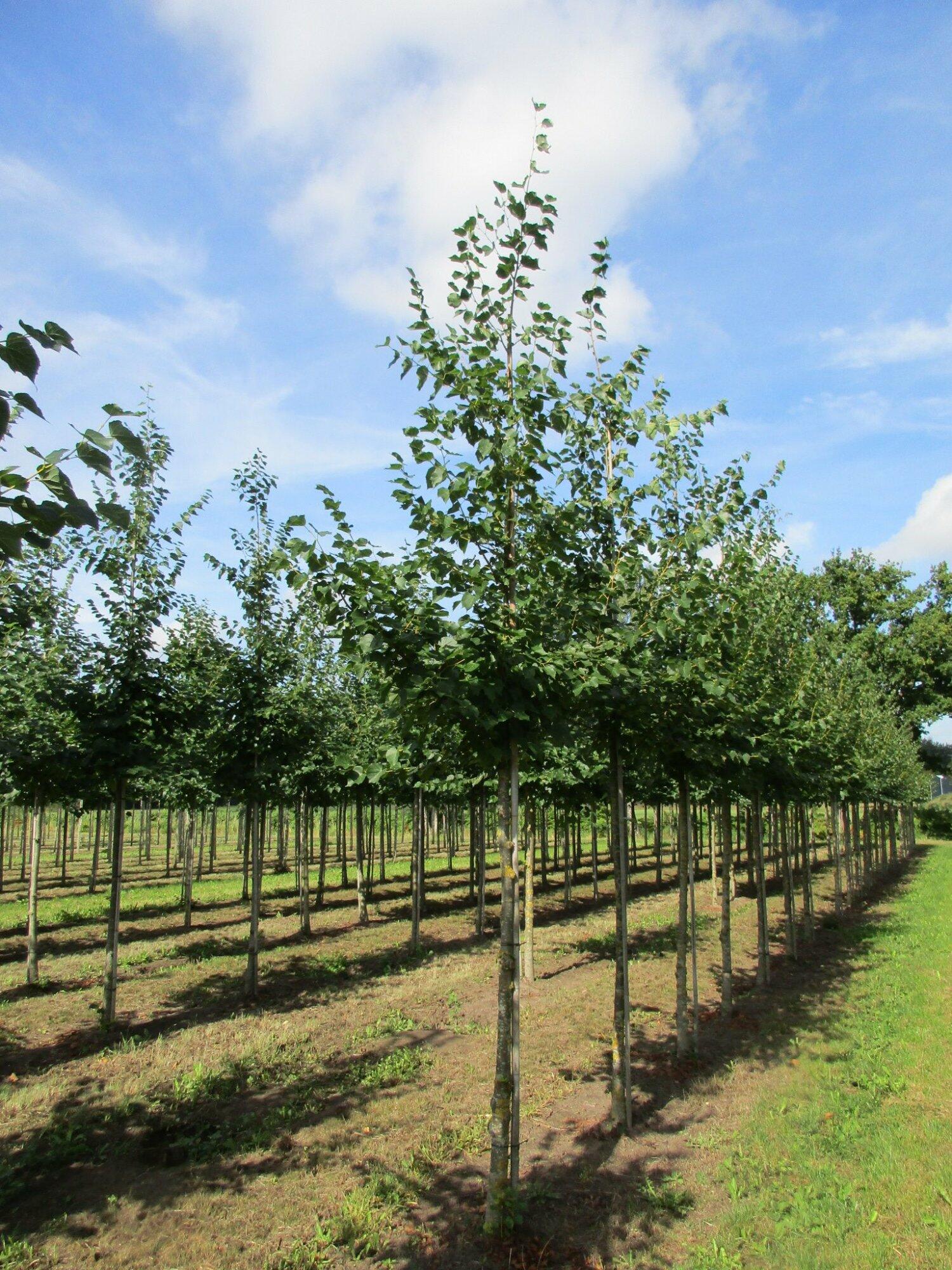
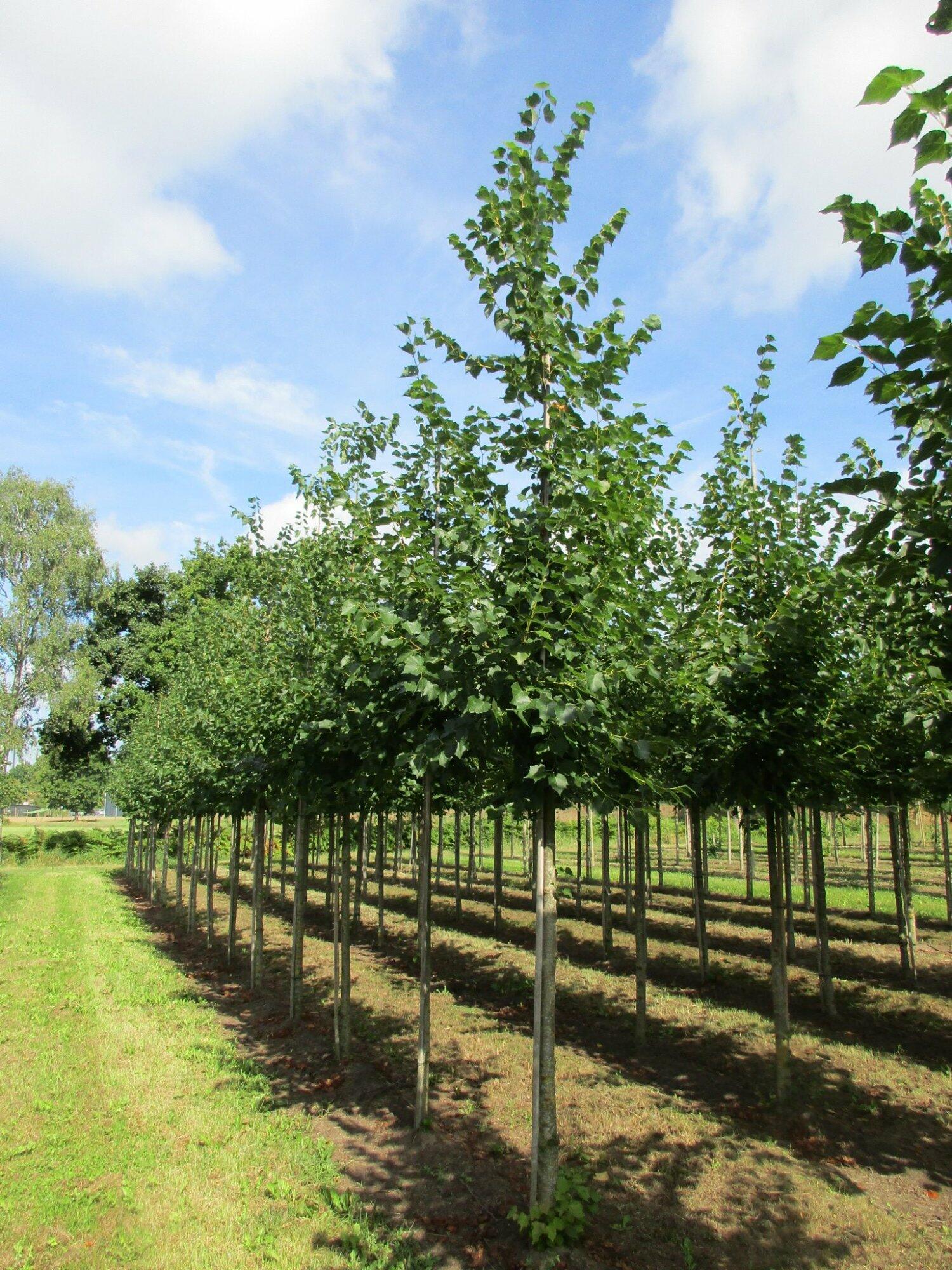
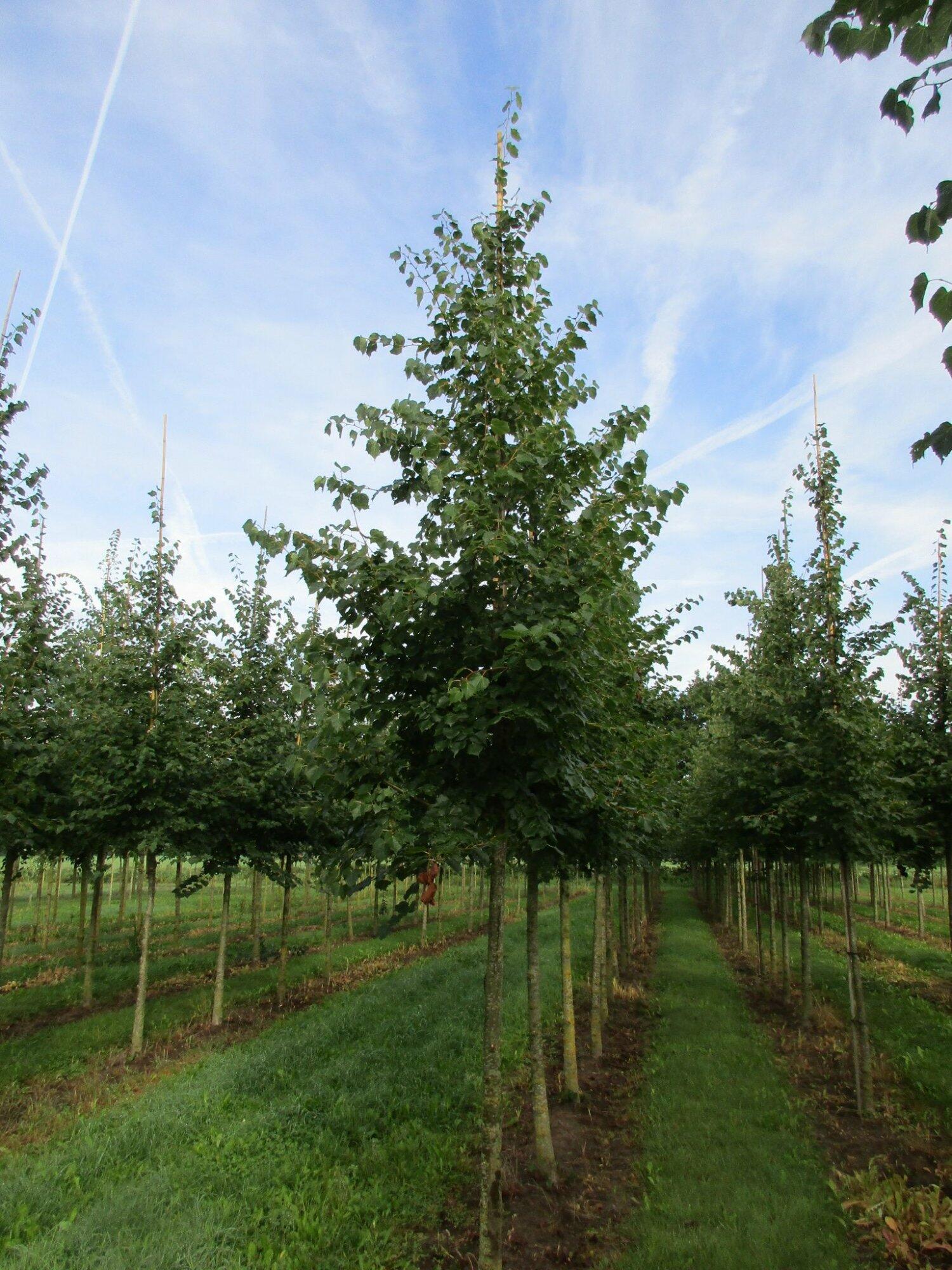
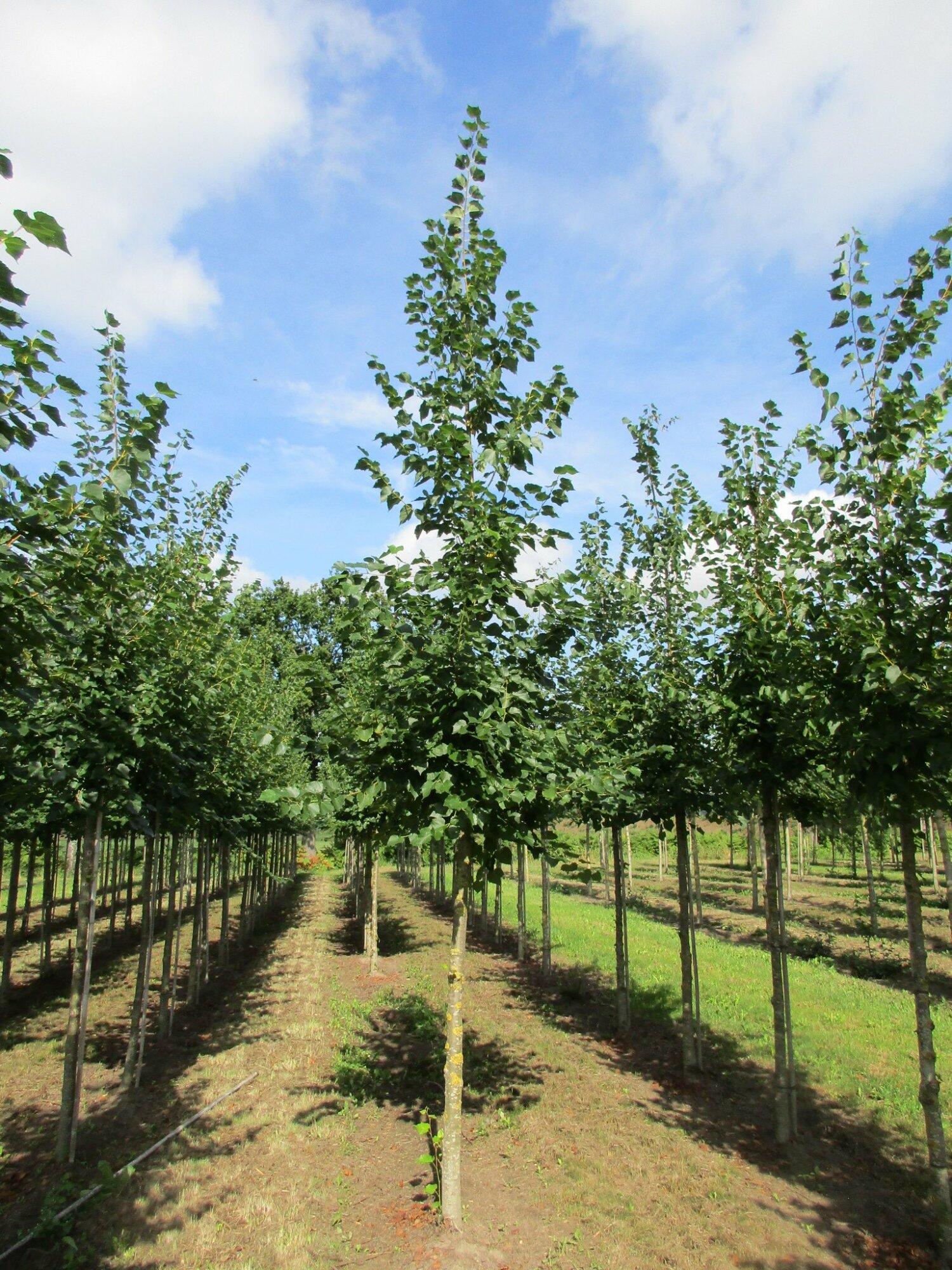
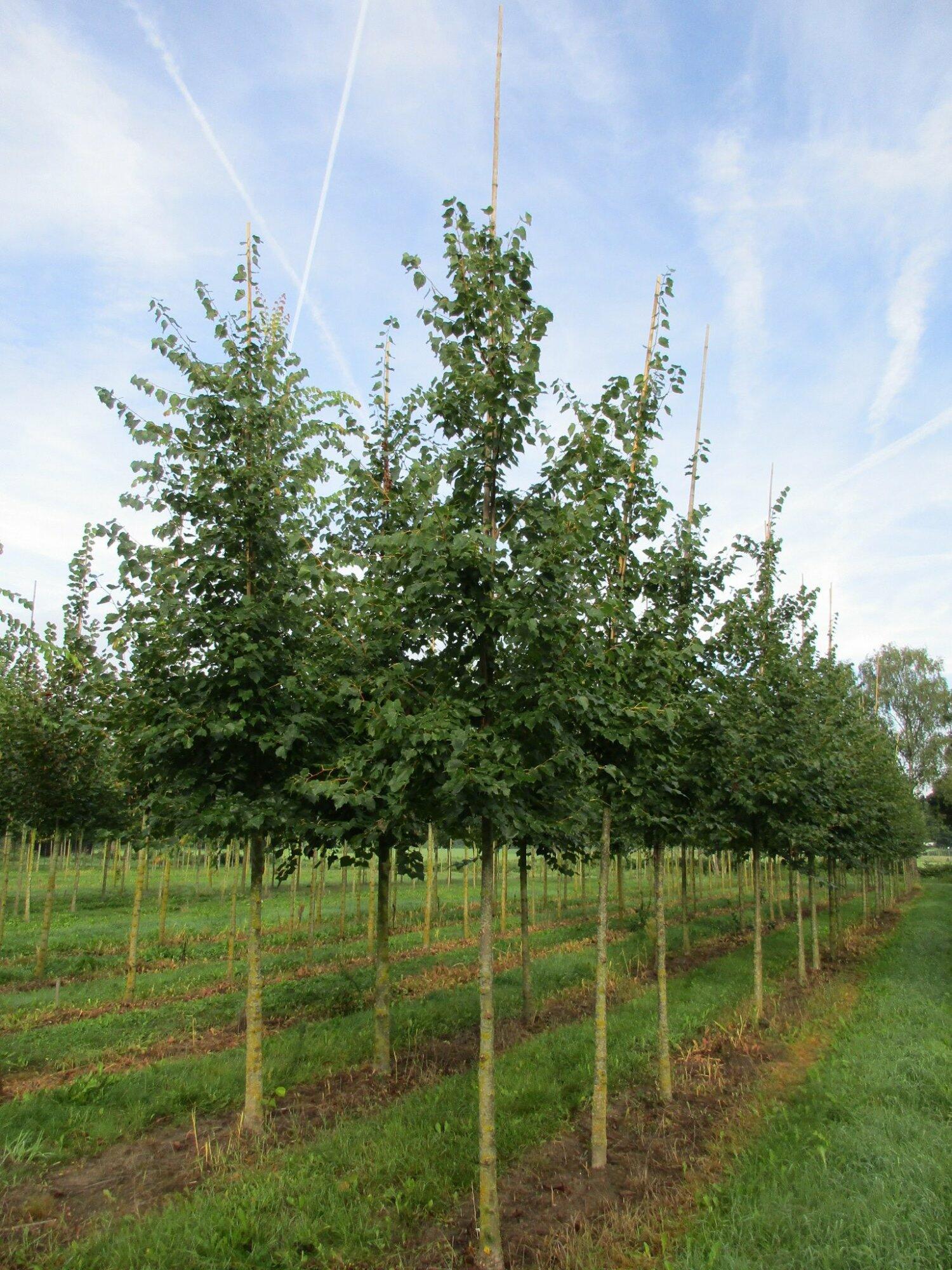
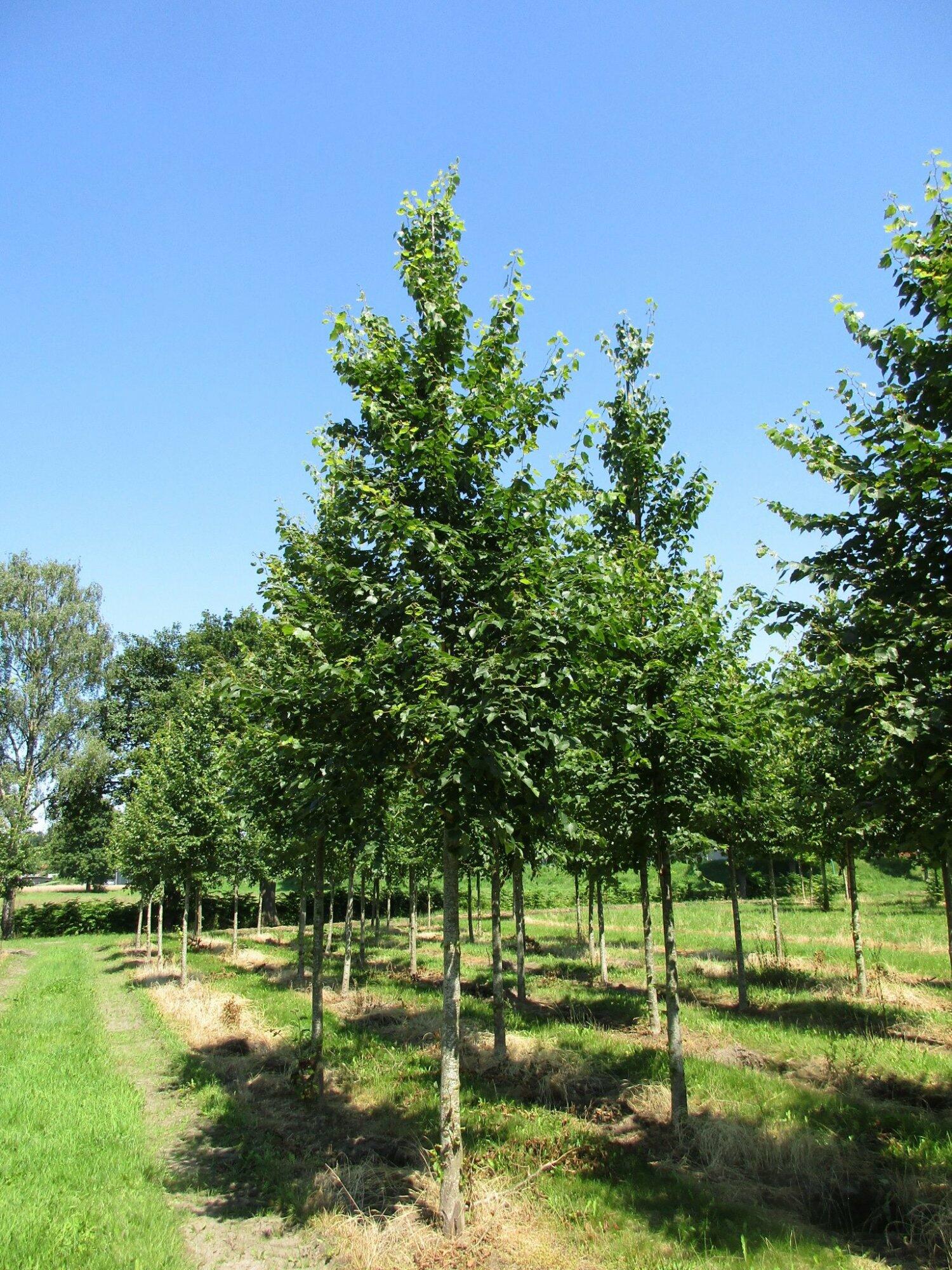
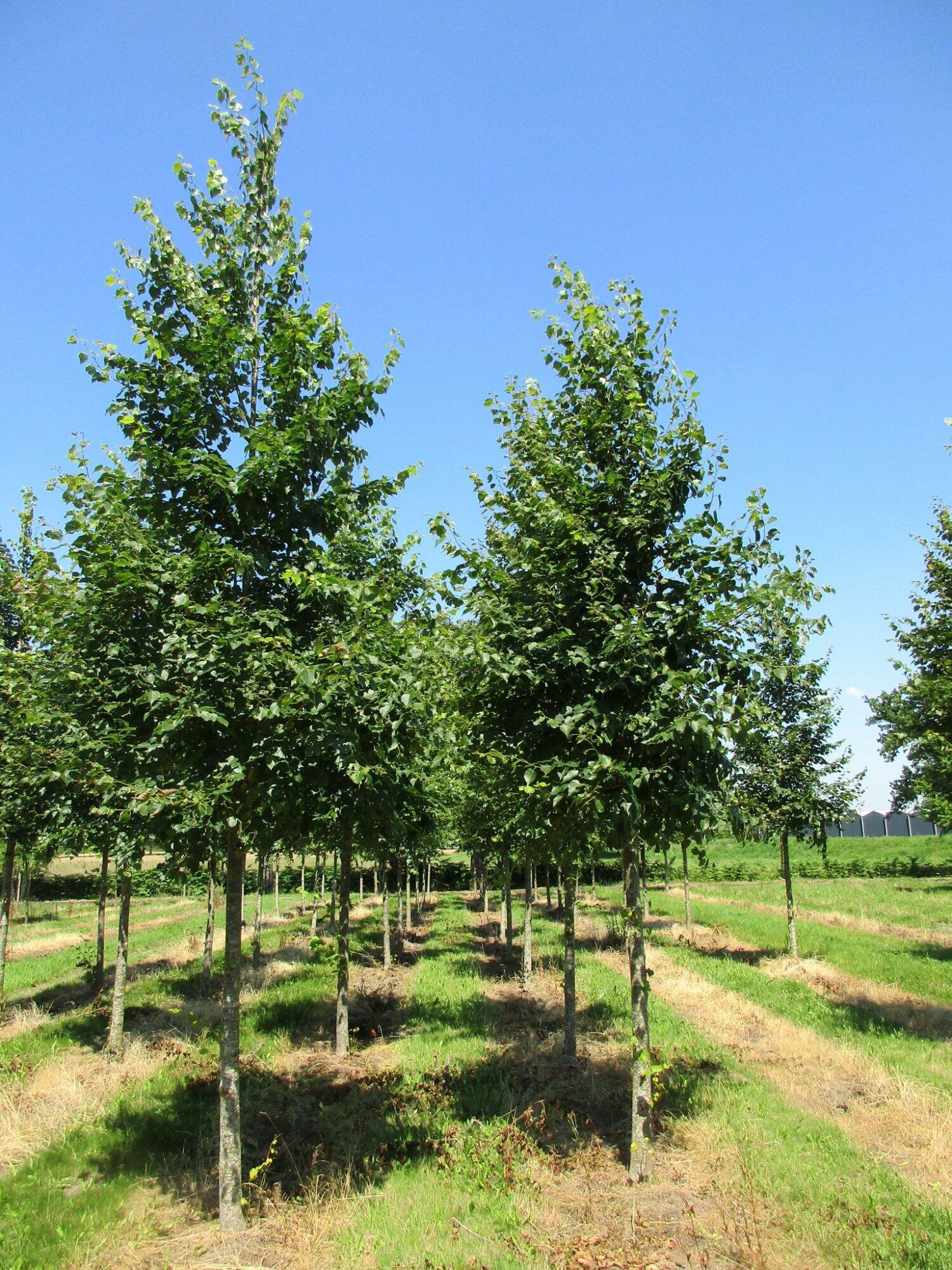
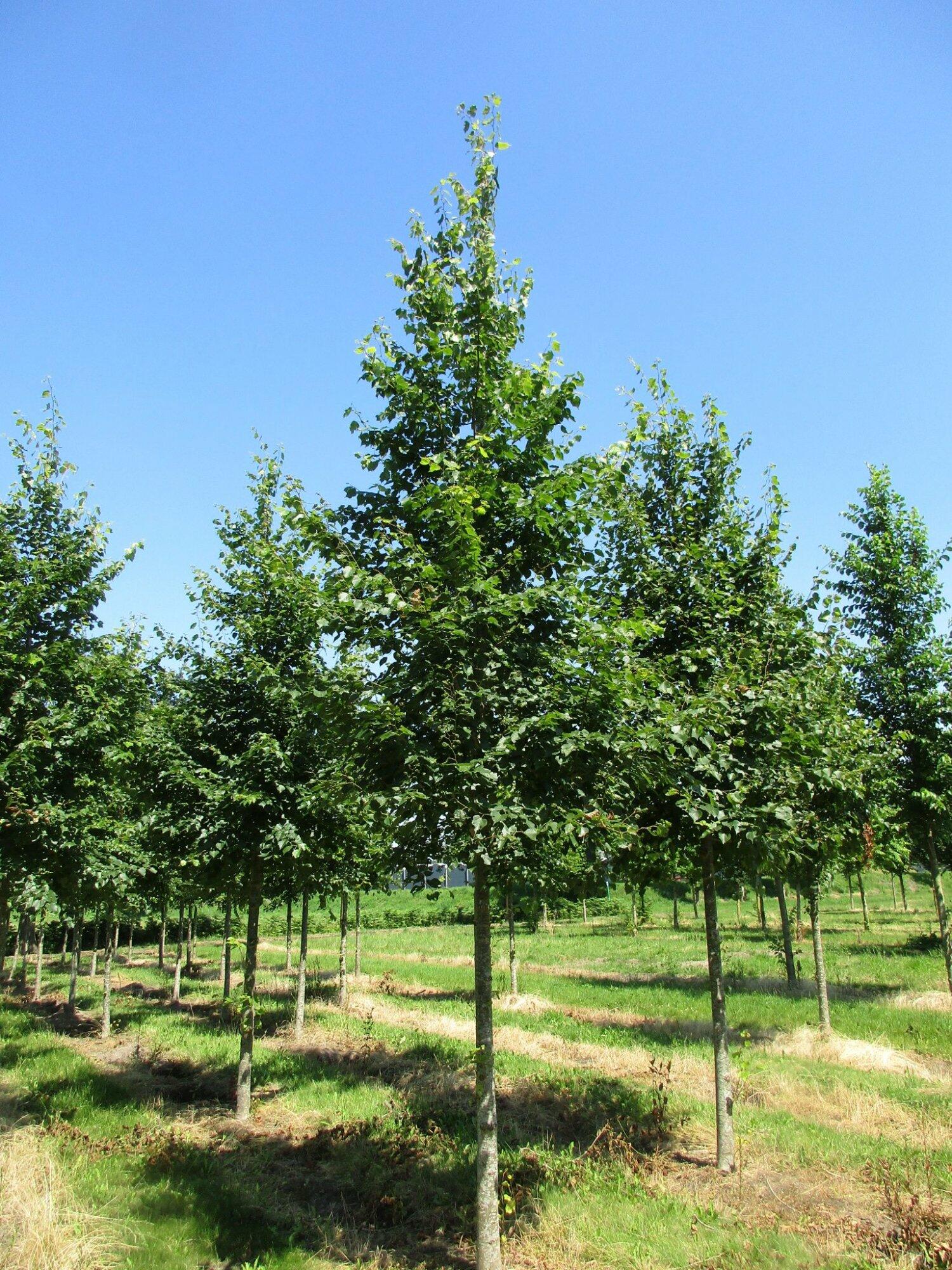
Below, we’ll take a closer look at Tilia mongolica ‘Buda’. The tree forms a pyramidal crown with a somewhat open structure. The drooping outer branches and twigs give this cultivar a graceful and airy appearance. The tree grows relatively slowly but can eventually reach a height of 10 to 15 meters.
Thanks to its specific characteristics, this tree is ideally suited for use as an avenue or street tree. This cultivar also looks great in a greenbelt or park. A major advantage of this linden tree is its resistance to aphids.
The fresh and glossy leaves give the tree an ornamental appearance. The relatively small leaves stand out because of their serrated outer edge. In the fall, the leaves turn a beautiful yellow, and the somewhat leathery leaves remain on the tree for a relatively long time. In June, this cultivar blooms profusely with many creamy-white, fragrant flower clusters. This makes the tree an excellent nectar source for bees.
Tilia mongolica is native to Mongolia and northern China. Tilia mongolica ‘Buda’ was selected around 2010 by the University of Budapest (Hungary). The tree is therefore named after the capital city, Budapest. The tree was introduced to the Netherlands by the Udenhout tree nursery.
Location of photos: our nursery