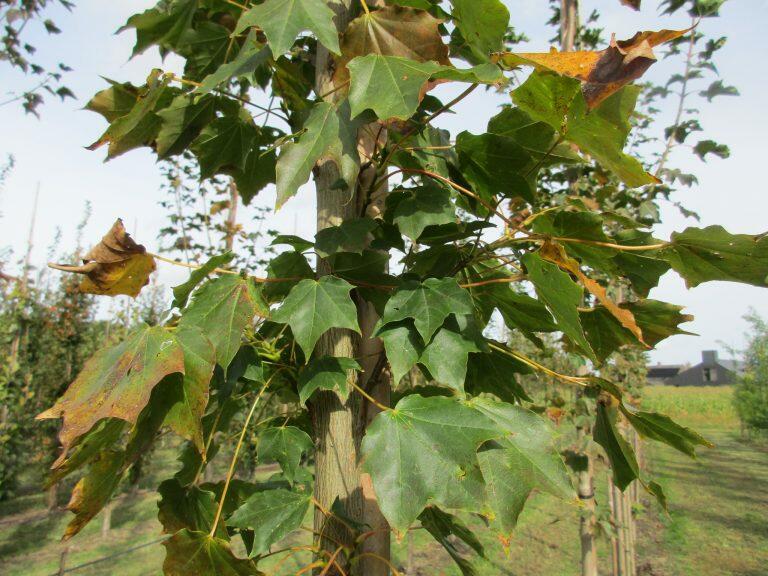
Roofs are increasingly being designed as rooftop gardens combined with terraces and, in some cases, dining areas. This combined use of space offers many opportunities in densely built-up areas.
On rooftops, various factors come into play, the most important of which are wind and root penetration space. Large trees—those in Category 1—are therefore generally not suitable for rooftops. Smaller species with a sparse canopy are suitable. The wind has less of a hold on the tree, allowing it to remain firmly rooted. Of course, proper anchoring is essential.
A rooftop garden is often entirely dependent on the amount of precipitation it receives. Because the roof can only support a limited load, rainwater is usually drained away quickly. Therefore, the plants must be drought-tolerant.
Some examples of tree species suitable for rooftops include Koelreuteria paniculata, Pinus sylvestris (Scots pine), Styphnolobium japonicum, Syringa vulgaris, and various species of Betula.
Rooftop gardens require specialized knowledge; please contact your account manager for advice.