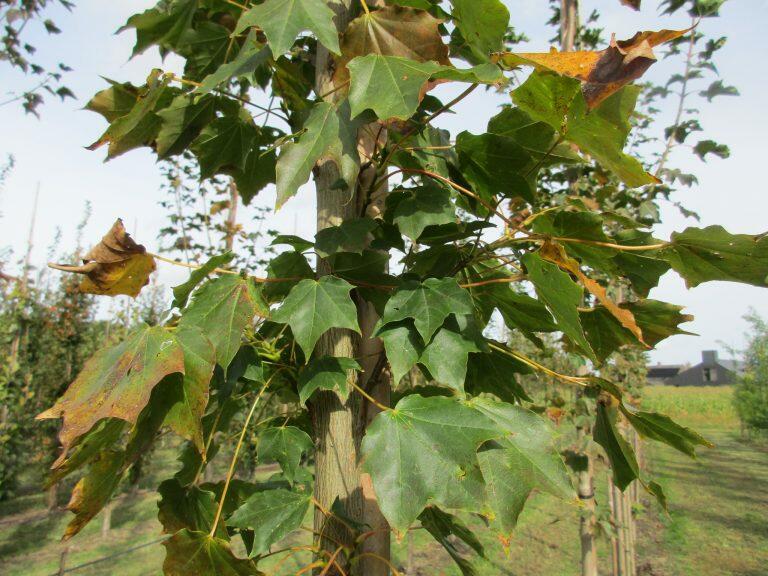
Trees can make a significant contribution to reducing particulate matter or mitigating its negative effects. However, every tree is different and absorbs different substances. Deciduous trees are most efficient at absorbing nitrogen oxides and ozone, while conifers are better suited for absorbing fine particulate matter.
Conifers Conifers are ideally suited for trapping particulate matter. The tiny dust particles stick to the needles and are then washed away by precipitation. Another advantage of conifers is that they remain green even in winter, thereby also contributing to the reduction of particulate matter.
Deciduous trees While conifers are effective at capturing particulate matter itself, deciduous trees address the effects of particulate matter. Through their stomata, the leaves effectively absorb gaseous pollutants from the air. Especially in the summer, ozone forms due to the combination of heat, volatile organic compounds, and nitrogen oxides. This so-called summer smog causes demonstrable harm to health. The selected deciduous trees are suitable for reducing this type of smog in urban environments.