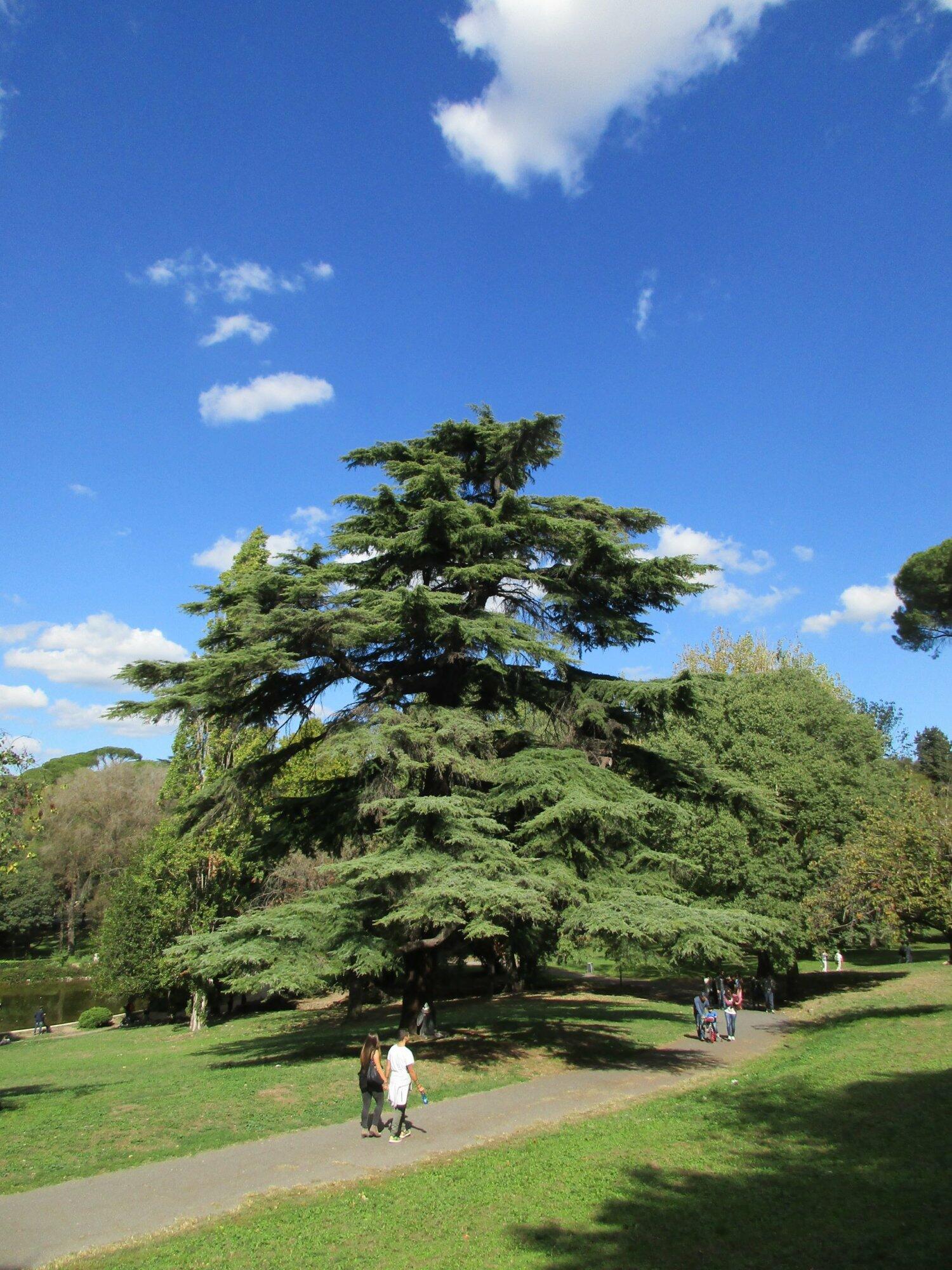
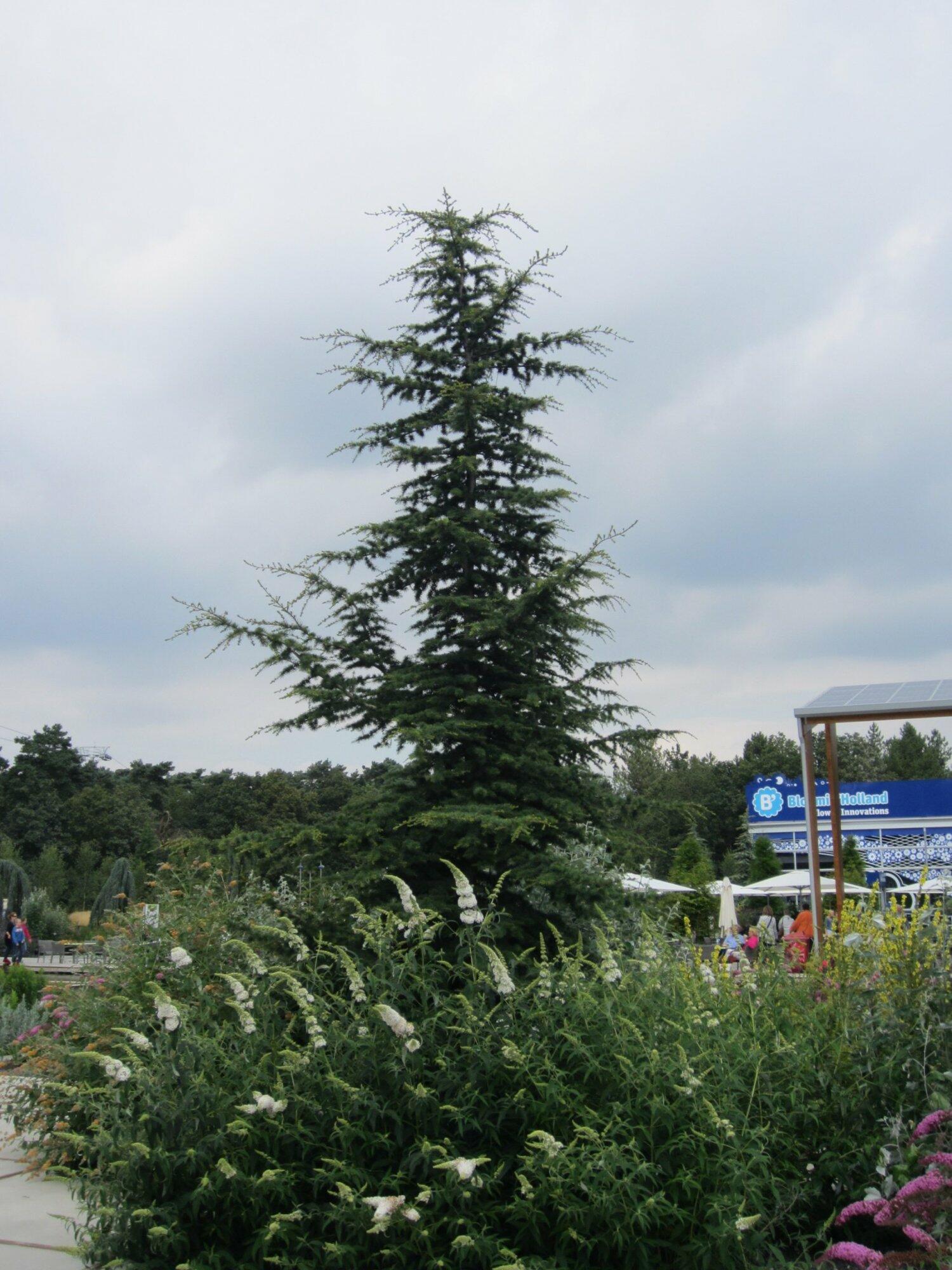
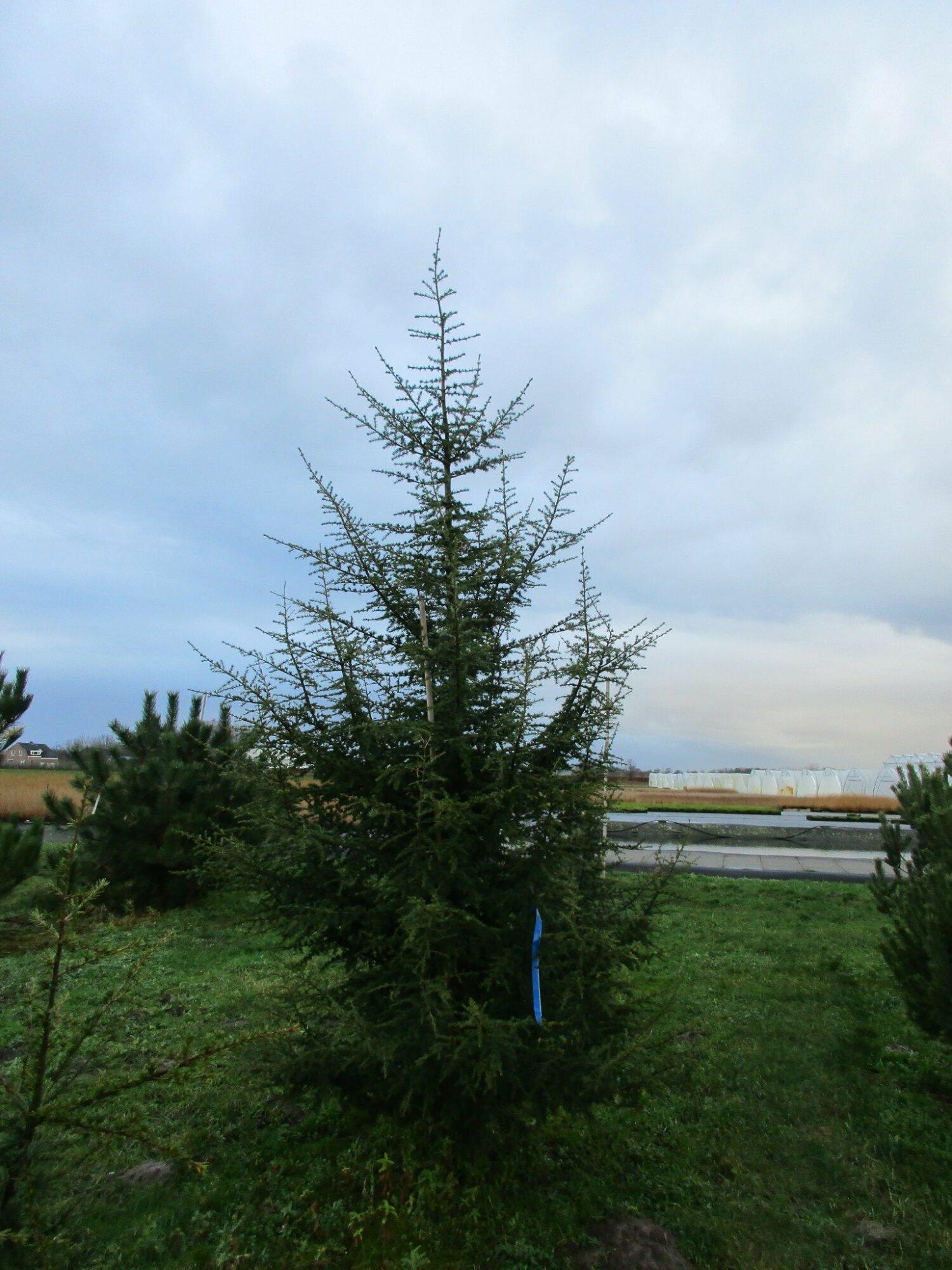
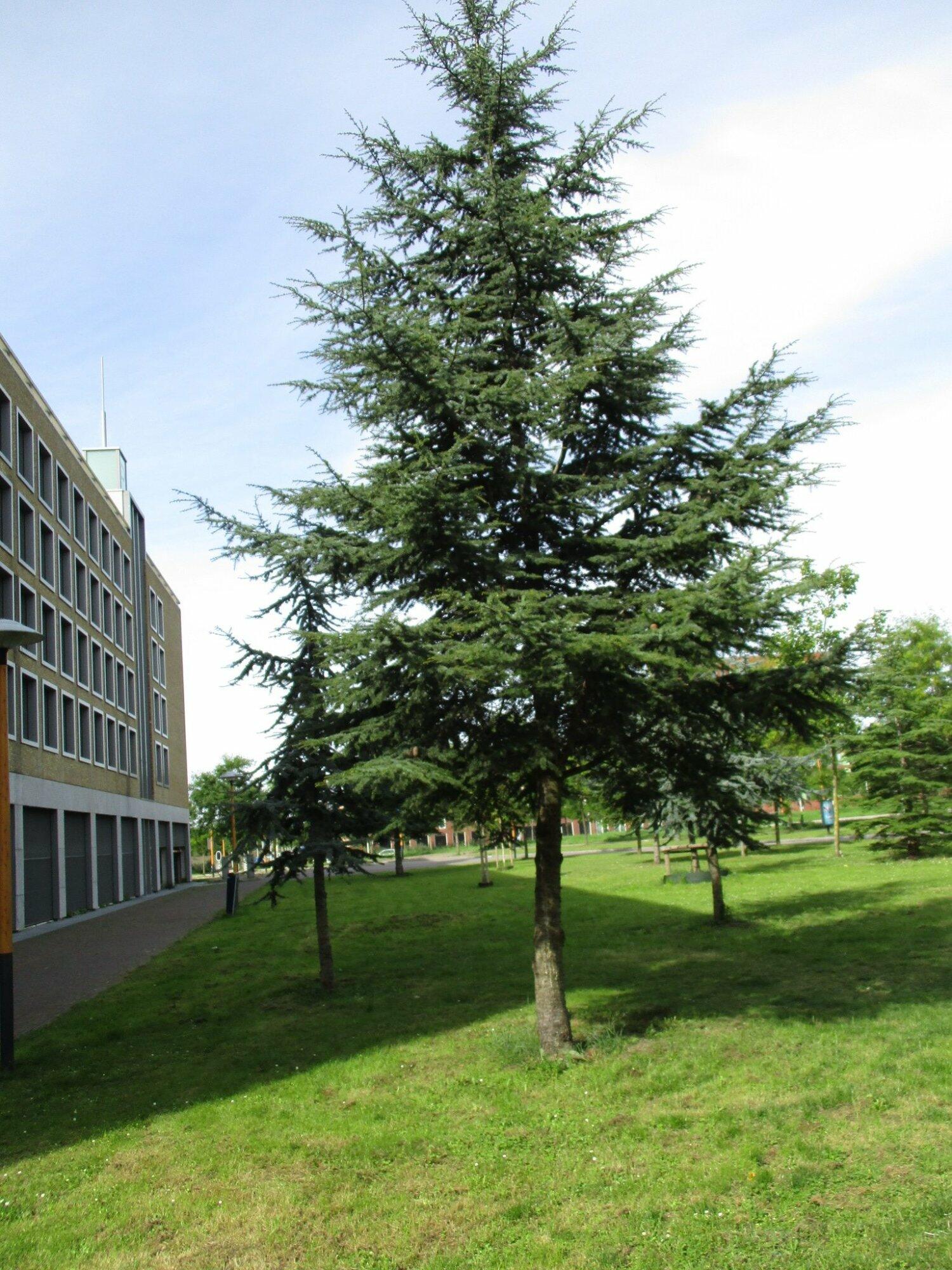
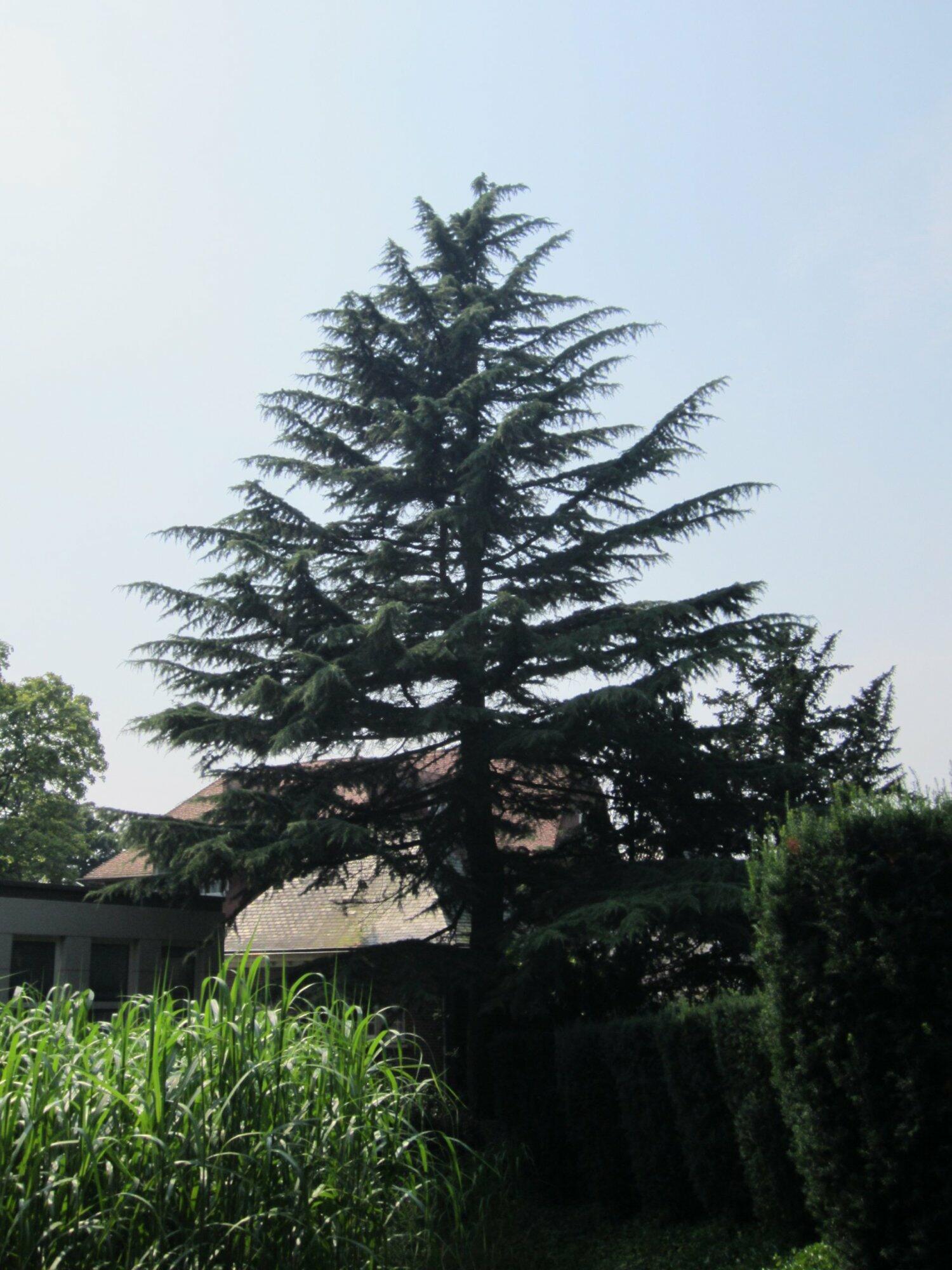
We’ll focus on Cedrus libani, the Lebanese cedar. The Lebanese cedar is suitable for planting in parks or along green belts, preferably in a location that isn’t too wet.
During its juvenile stage, the tree grows slowly, developing a narrow pyramidal crown; its growth habit is often somewhat erratic. In a good, open location, it can grow into a stately tree with distinctive umbrella-shaped tiers. Its final height in the Netherlands is 20 to 25 meters.
The needles, with their beautiful, fresh green color, are a major ornamental feature. The tree does not produce cones until it is mature. These consist of upright, light brown cones measuring 8 to 10 cm in length.
The tree is native to Lebanon, Turkey, Syria, and the Mediterranean region. On Mount Lebanon and at eight other locations in Lebanon, there are specimens that are over 1,000 years old. The Lebanese cedar is featured on the flag of Lebanon. In its natural range, the tree can grow up to forty meters tall.
Another cultivar with blue-colored needles is Cedrus libani ‘Glauca’. Its irregular growth habit and spreading branch structure are characteristic features.
Photo locations: Rome, Floriade Venlo, Leidsche Rijn in Utrecht, Nijmegen, and our nursery