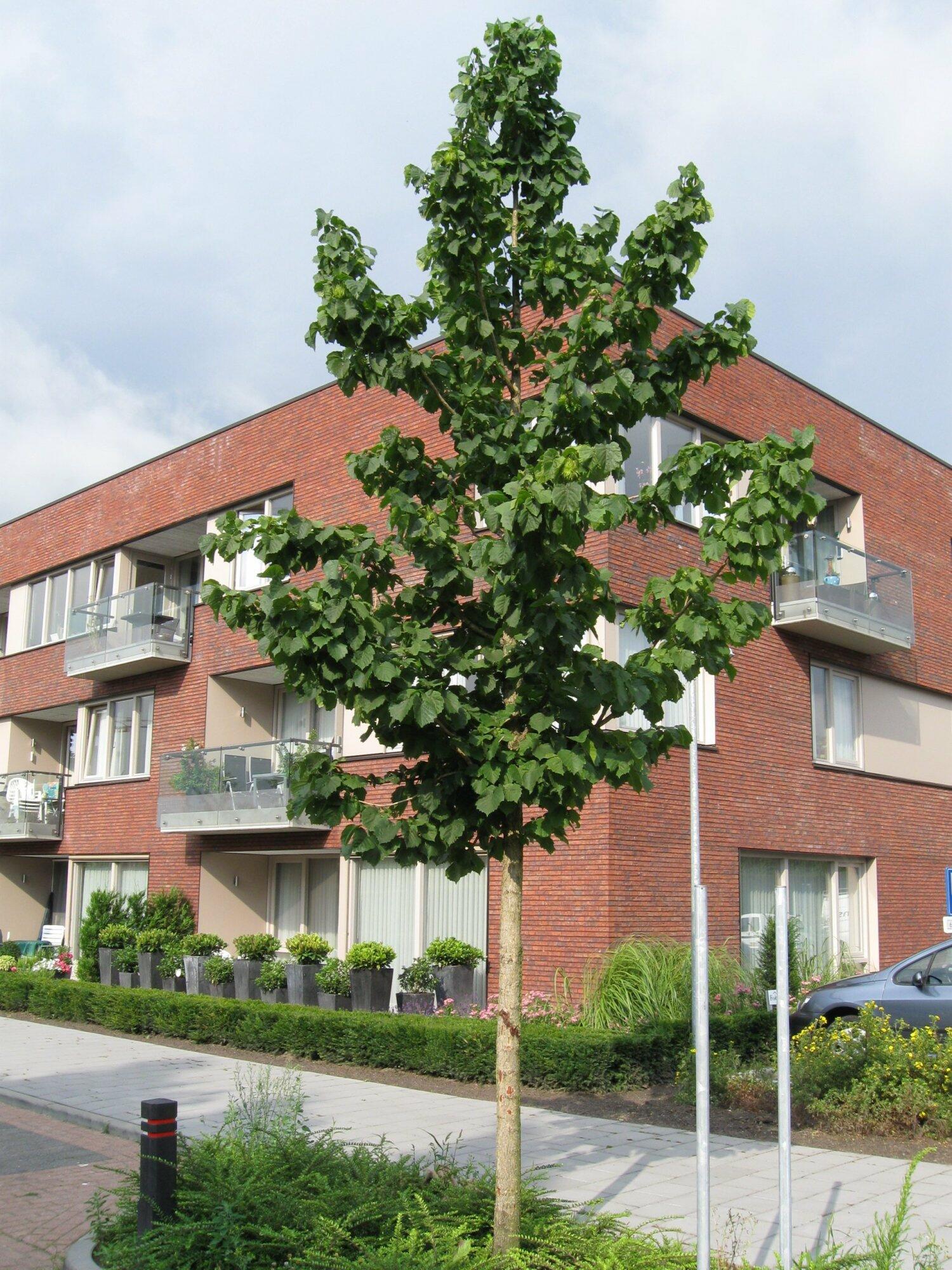
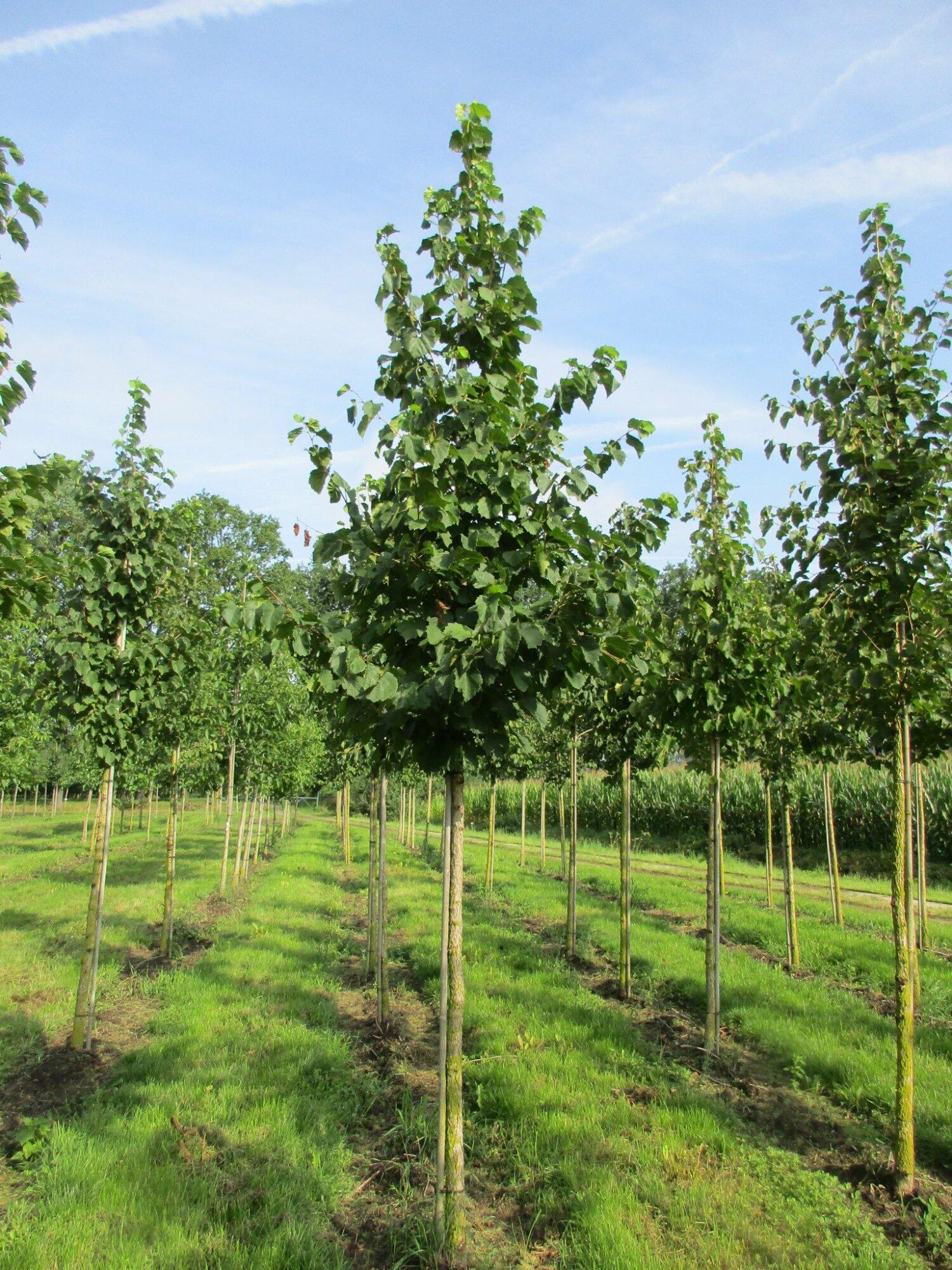
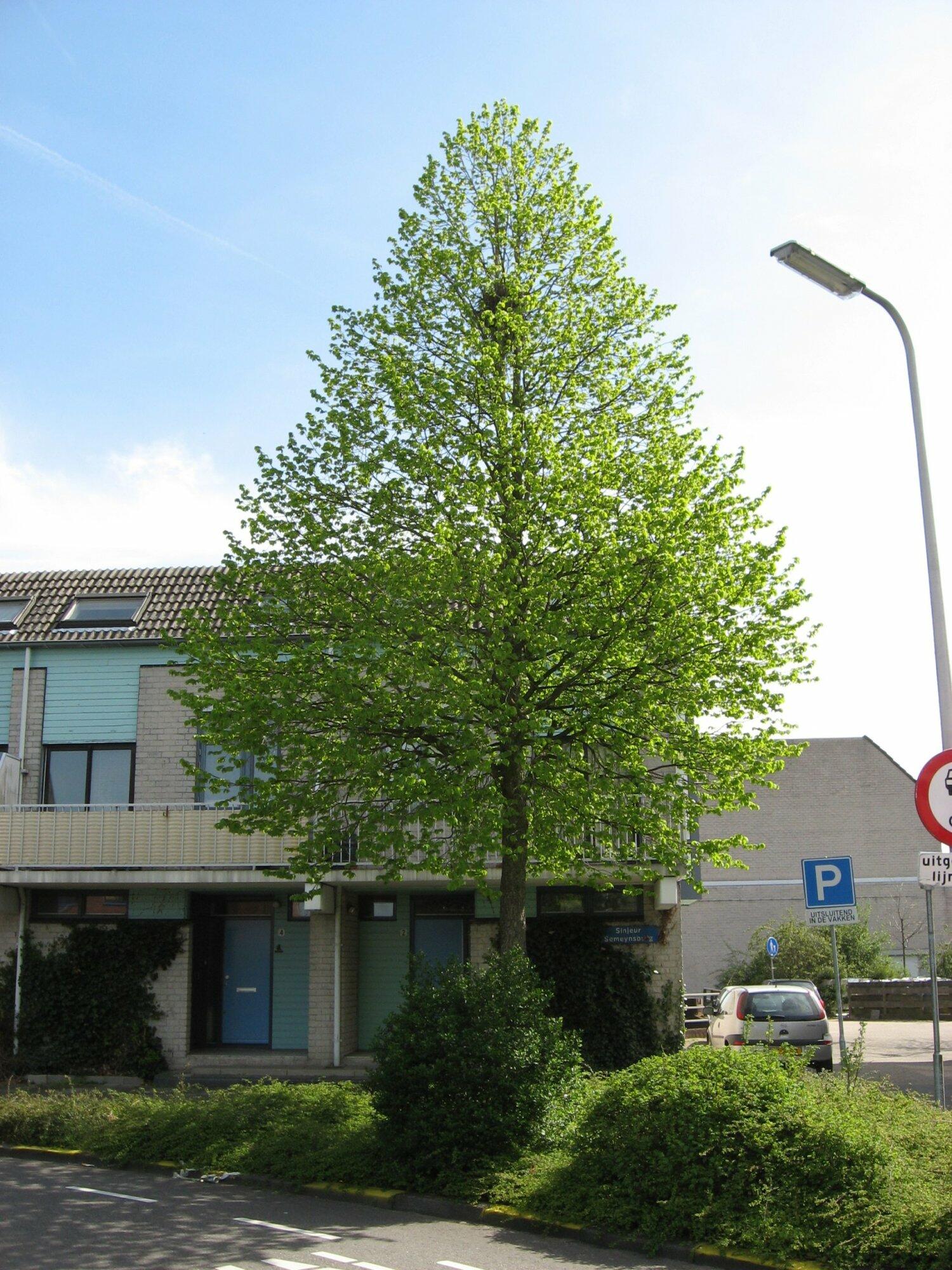
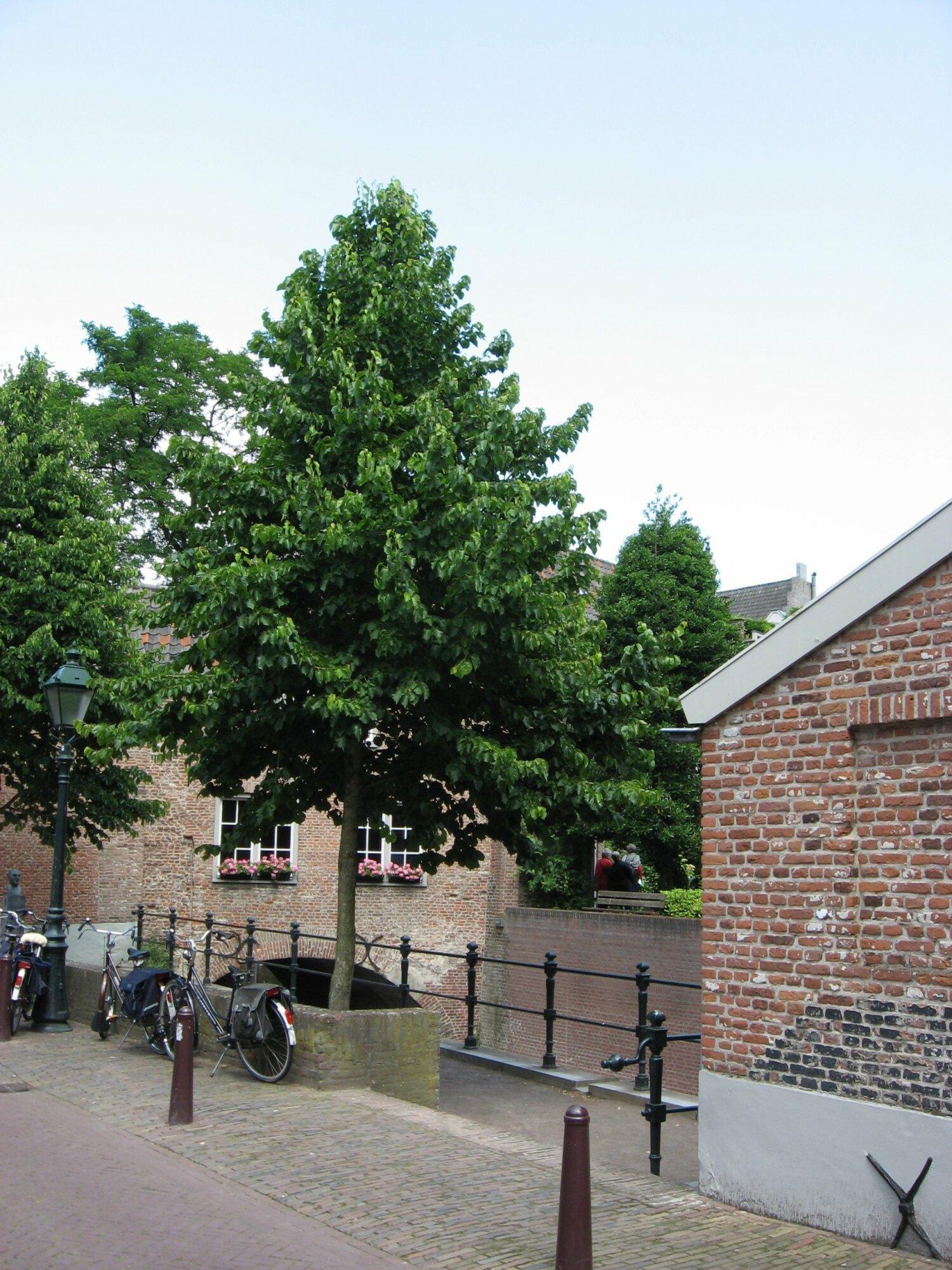
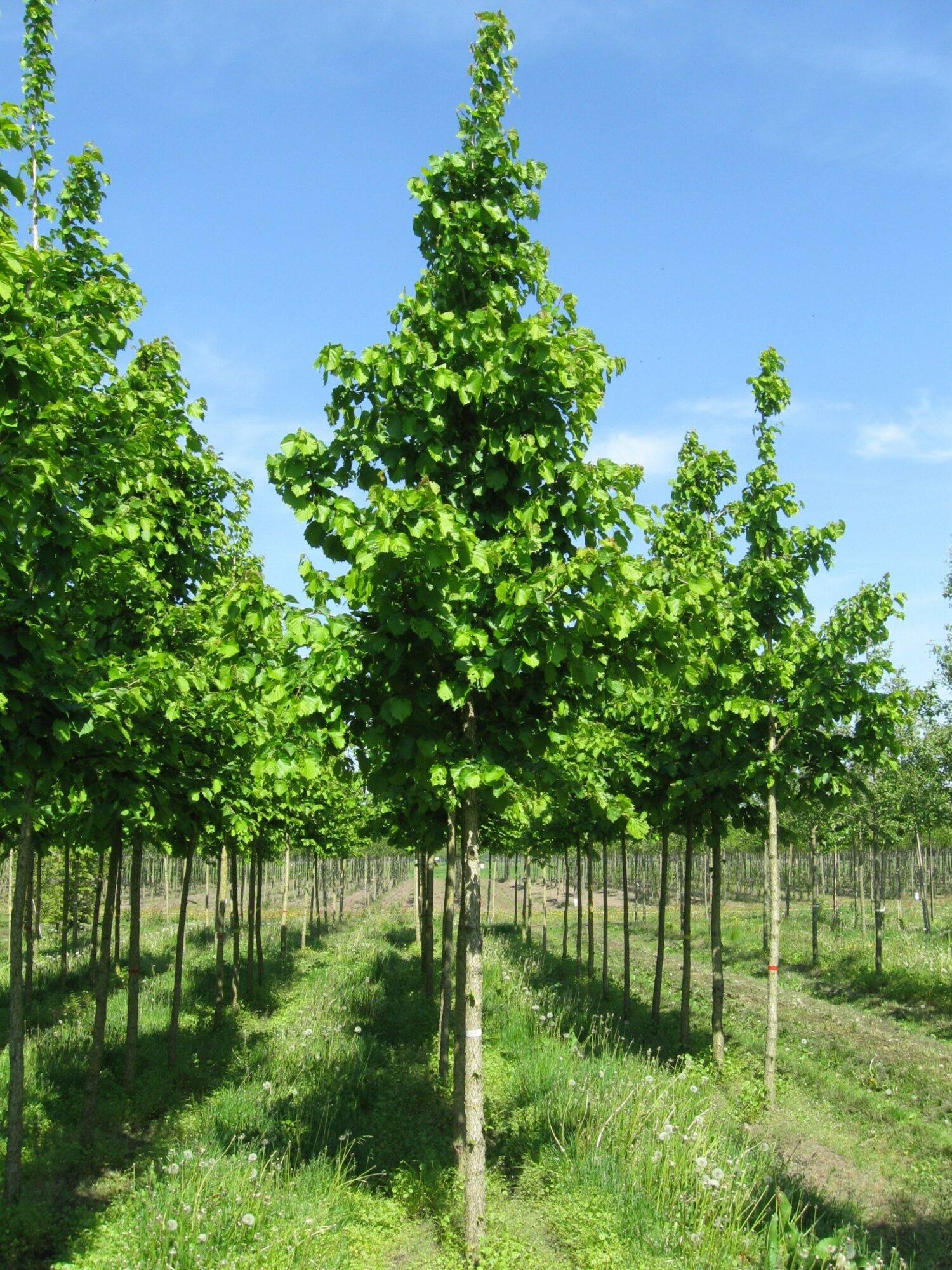
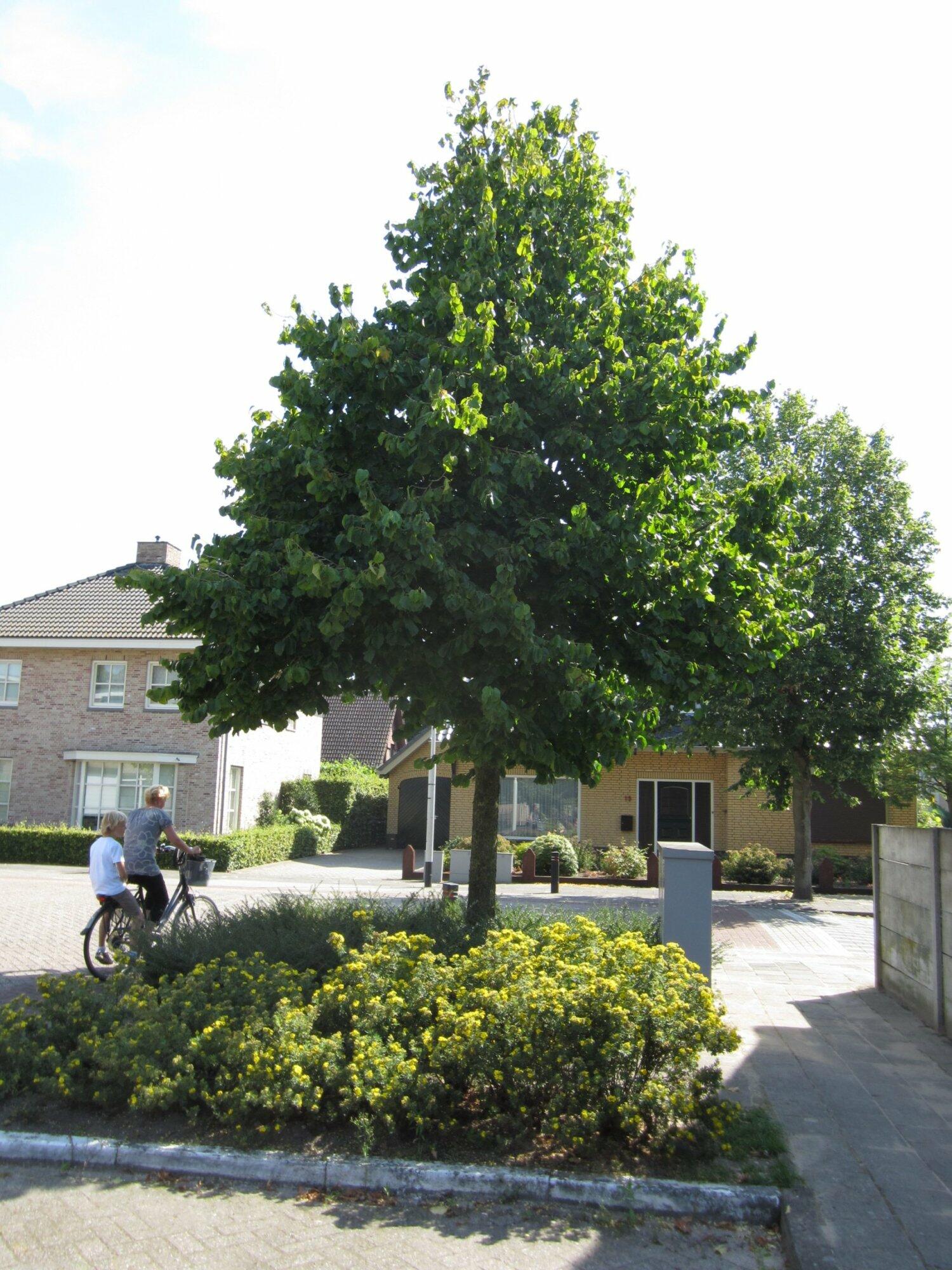
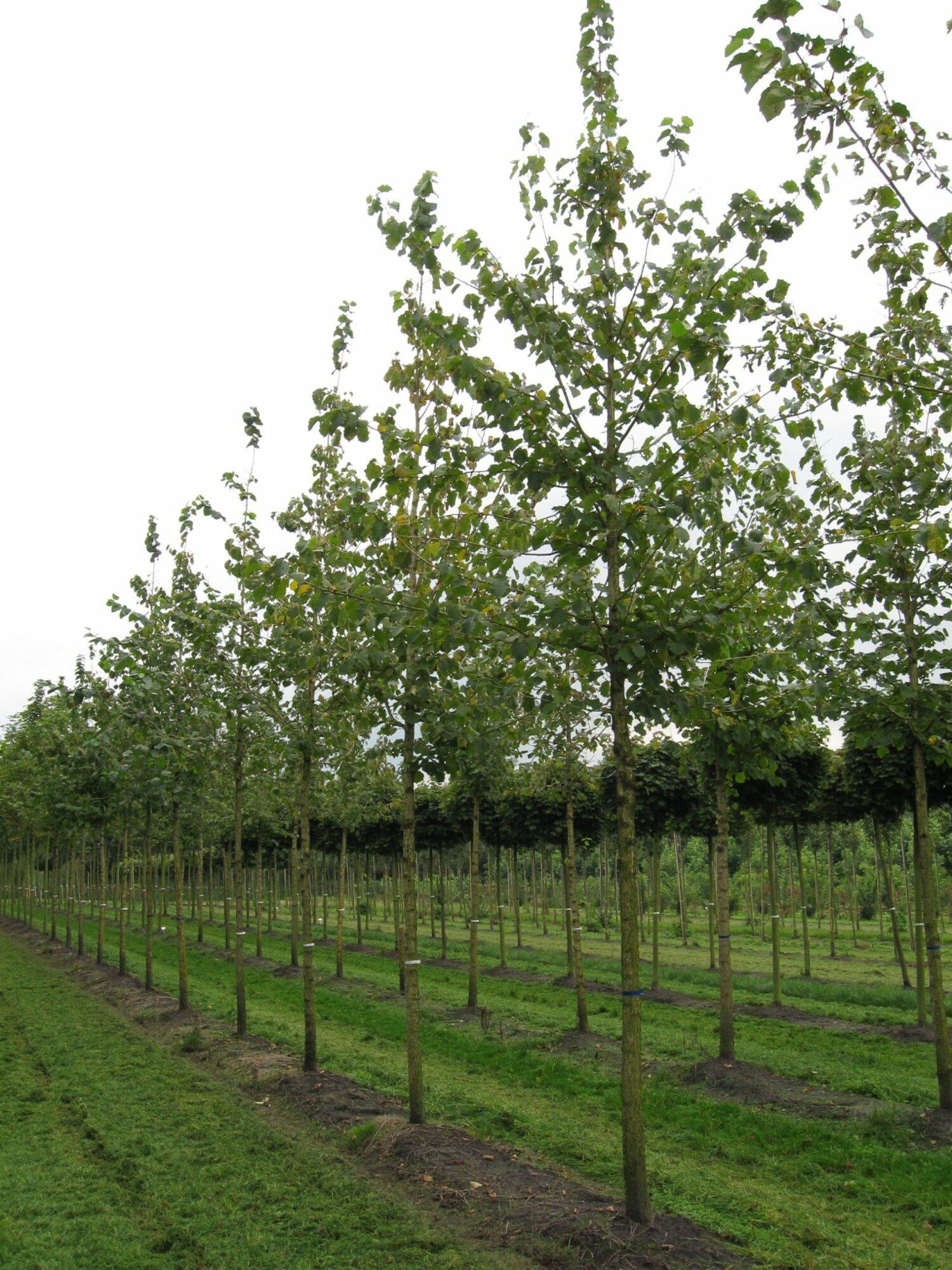
Below, we focus on Corylus colurna, the tree hazel or Turkish hazel. The tree grows relatively slowly but can eventually reach a height of 12 to 16 meters. This cultivar forms a broad, conical crown. This makes the tree suitable for planting along wide streets with grassy medians, green belts, and in parks. Due to its fruit production, the tree may be slightly less suitable for planted in paved areas, although it does tolerate paving very well.
Its most striking feature is probably the cork-like bark on the tree's trunk and branches. This makes it relatively easy to identify the tree even in winter.
Corylus colurna is one of the first trees to bloom each year, even before the leaves appear; long male catkins begin to develop as early as January and February. Unfortunately, these also release pollen into the air. The fertilized reddish female flowers develop over the course of the summer into edible fruits enclosed in irregularly shaped husks. The nuts are edible for squirrels and larger birds but are less suitable for human consumption.
Another ornamental feature is its fairly large, fresh-green leaves with a double-serrated margin, which can grow to be 7 to 12 cm long. The soft hairs on the leaf veins are a striking characteristic.
Its native range is in southern and eastern Europe. The range extends from the Mediterranean Sea eastward into Iran. I found a more detailed description of Corylus colurna on the website below:
https://www.floravannederland.nl/planten/boomhazelaar
Photos taken in:’s-Hertogenbosch, Capelle aan den IJssel, Hoeven, Schijndel, and our nursery