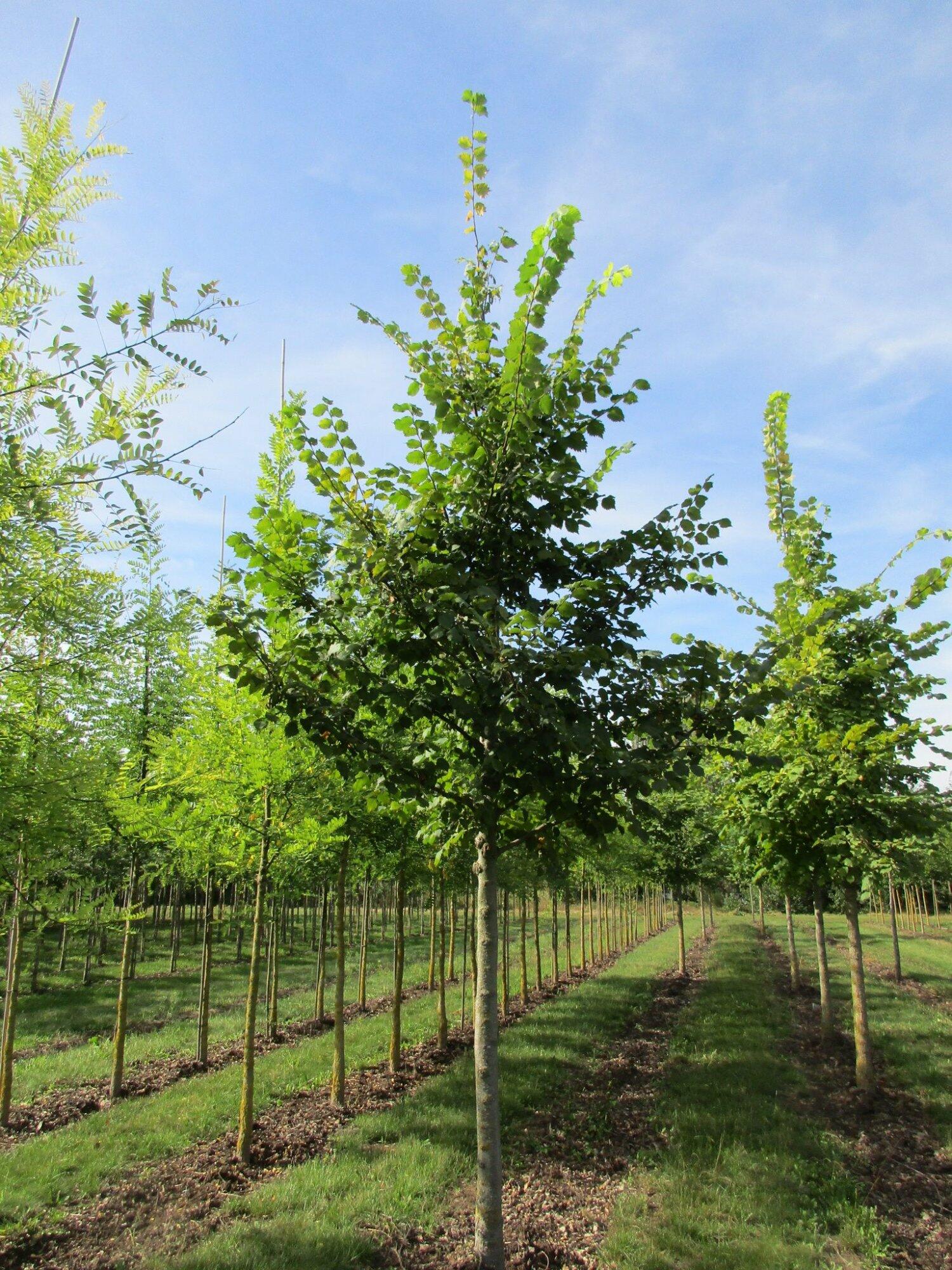
Ulmus laevis develops a loose, broad crown and is therefore less suitable for use as a street tree. Due to its specific characteristics, the tree is well suited for use in landscaping, on green belts, and in parks.
Ulmus laevis has few soil requirements and thrives in both clay and sandy soils. It is a very healthy tree and, in practice, has proven to be relatively resistant to Dutch elm disease.
The glossy dark green leaves of Ulmus laevis are striking; they are pinnate and have an asymmetrical base with a double-serrated margin. The fall colors are slightly yellow, but not particularly spectacular.
Ulmus laevis (European white elm) is native to Europe and the Netherlands. In the wild, the elm is found in Belgium and Germany, and likely in South Limburg and the Achterhoek. In short, it’s a beautiful landscape tree worth considering for planting.
Location of photos: Maastricht and our nursery